



Anyone beginning to explore Rudolf Steiner or anthroposophy encounters the same problem: there is an enormous amount to read, but very little guidance on where to begin.
Rudolf Steiner gave thousands of lectures and wrote extensively on spiritual development, human nature, reincarnation, karma, Christianity, education, medicine, agriculture, science, art and social life. His work inspired Waldorf education, biodynamic agriculture, anthroposophic medicine, Camphill communities and numerous cultural initiatives around the world.
Yet for a new reader, anthroposophy can be difficult to enter.
Which books are essential? What does “spiritual science” actually mean? How do the physical, etheric and astral bodies relate to one another? What is the “I”? Who are Lucifer and Ahriman? What does anthroposophy say about life after death, reincarnation, karma, Christ, freedom and spiritual knowledge?
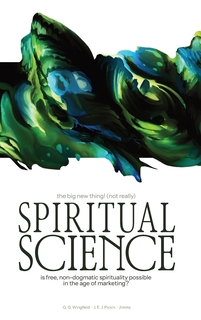
Spiritual Science: Is Free, Non-Dogmatic Spirituality Possible in the Age of Marketing? was written to answer those questions and provide a clear foundation for further study.
It is an introductory book on Rudolf Steiner and anthroposophy for readers who want a broad, understandable overview before entering the much larger body of anthroposophical literature.
What Is Spiritual Science About?
Spiritual Science is a beginner-friendly introduction to the central ideas of anthroposophy.
It explains the basic knowledge a reader needs in order to understand anthroposophical books, lectures and discussions. Rather than concentrating on one specialised area, it presents anthroposophy as a connected worldview.
The book explores questions such as:
- What is anthroposophy?
- What did Rudolf Steiner mean by spiritual science?
- Can spirituality remain free and non-dogmatic?
- What is the human being beyond the physical body?
- What are the etheric body, astral body and human “I”?
- What happens after death?
- How do reincarnation and karma work?
- What are Luciferic and Ahrimanic forces?
- What is the role of Christ in anthroposophy?
- Can human beings develop spiritual knowledge?
- How does anthroposophy relate to freedom?
- How can a person decide what to believe without surrendering their judgement?
The purpose of the book is not to exhaust every subject. No single introductory book could adequately explain the whole of anthroposophy.
Instead, it gives readers a reliable foundation and signposts the subjects, books and areas of study they may want to investigate next.
Who Is This Book For?
Spiritual Science is intended for people who are interested in Rudolf Steiner but do not yet know where to begin.
It may be particularly useful for:
- readers searching for an introductory book on anthroposophy;
- people encountering Rudolf Steiner for the first time;
- Waldorf parents who want to understand the ideas behind Steiner education;
- people involved in biodynamics, Camphill or anthroposophic medicine;
- spiritually independent readers who are uncomfortable with dogma;
- members of anthroposophical study groups who need a general reference point;
- people who have attempted to read Steiner but found his terminology difficult;
- critics or curious outsiders who want to understand what anthroposophy actually teaches.
The book does not assume that the reader is already an anthroposophist. It also does not demand that the reader accept every anthroposophical claim. Its central concern is whether a spiritual path can present definite ideas while preserving the freedom of the individual.
Why Is Anthroposophy Difficult for Beginners?
Anthroposophy is not one simple doctrine.
It is a broad spiritual and philosophical movement containing ideas about the human being, nature, history, consciousness, religion, society and the evolution of the world. Its practical applications include education, agriculture, medicine, social care, architecture, banking and the arts.
This breadth is one of anthroposophy’s strengths. It is also what makes the subject difficult to approach.
A reader searching for the best Rudolf Steiner book for beginners may be directed towards works such as:
- Theosophy;
- Knowledge of the Higher Worlds;
- Occult Science or An Outline of Esoteric Science;
- The Philosophy of Freedom;
- Christianity as Mystical Fact.
All of these books are important. None, however, functions as a simple modern guide to the entire field.
Steiner’s terminology can also be unfamiliar. Words such as “etheric,” “astral,” “spirit self,” “consciousness soul,” “supersensible” and “spiritual hierarchies” often appear before a new reader has been given a clear map of how they fit together.
Spiritual Science was created to provide that map.
What Does “Spiritual Science” Mean?
Rudolf Steiner used the term “spiritual science” for a disciplined investigation of spiritual reality. In anthroposophy, spiritual questions are not supposed to be matters of inherited belief alone. Steiner argued that human consciousness could be developed through careful exercises, self-observation and moral work, making direct spiritual knowledge possible.
This does not mean that every reader must immediately accept every result Steiner reported. A non-dogmatic approach to anthroposophy requires the reader to distinguish between several things:
- what Steiner claimed to have investigated;
- how those claims fit together;
- what can be examined through ordinary reasoning and experience;
- what requires further spiritual development;
- what the reader is not yet in a position to confirm or reject.
Spiritual Science presents anthroposophy as an invitation to inquiry rather than a collection of statements that must be repeated. That distinction is essential. A spirituality based on freedom cannot demand intellectual submission.
Can Spirituality Really Be Non-Dogmatic?
Modern spiritual culture is filled with marketing.
Religious organisations, spiritual teachers, publishers, influencers and commercial platforms all compete for attention. Spirituality is frequently presented as a product capable of supplying certainty, healing, identity or personal transformation.
This creates a serious problem.
A spiritual path may claim to liberate people while using fear, belonging, authority or carefully constructed branding to influence what they believe. Even anti-dogmatic movements can develop their own hidden dogmas.
The question in the title of Spiritual Science is therefore:
Is free, non-dogmatic spirituality possible in the age of marketing?
The book does not argue that people should avoid all teachers, traditions or spiritual communities. Nor does it suggest that every organised movement is manipulative. Instead, it asks how a person can engage seriously with spiritual knowledge while retaining independent judgement. That means examining not only what is taught, but also:
- how authority is created;
- why certain ideas feel compelling;
- how communities influence belief;
- how spiritual language can be marketed;
- whether doubt is permitted;
- whether disagreement is treated honestly;
- whether the individual becomes freer through participation.
These questions are relevant far beyond anthroposophy.
What Does Anthroposophy Say About the Human Being?
One of the foundations of anthroposophy is the idea that a human being cannot be fully understood as a physical organism alone.
Steiner described the human being in several overlapping ways.
The most common beginner’s model includes four members:
The physical body is the material organism.
The etheric body is associated with life, growth, regeneration and the organisation of living processes.
The astral body is associated with consciousness, sensation, desire, pleasure, pain and inward experience.
The “I” is the individual spiritual centre capable of self-consciousness, freedom and transformation.
Anthroposophy also describes the development of the soul and spirit using terms such as the sentient soul, intellectual soul, consciousness soul, spirit self, life spirit and spirit human.
These models can appear confusing when encountered separately. Spiritual Science introduces them as related perspectives rather than competing lists.
Understanding this picture of the human being provides a basis for approaching anthroposophical ideas about education, illness, sleep, death, reincarnation and spiritual development.
Reincarnation, Karma and Life After Death
Anthroposophy teaches that human individuality exists through repeated earthly lives.
Reincarnation is not presented merely as a sequence of personalities. The individual passes through earthly life, death, a period of spiritual existence and eventual preparation for another incarnation.
Karma describes the meaningful relationship between lives, actions, encounters and developmental tasks. It is not simply a system of reward and punishment.
A serious introduction to karma must avoid several common distortions.
Karma should not be used to blame people for suffering. It should not become an excuse for social indifference. Nor should speculative claims about another person’s previous life be treated as established fact.
Spiritual Science introduces reincarnation and karma as central anthroposophical ideas while emphasising the intellectual and ethical care required when discussing them.
The book also outlines the anthroposophical account of death and the spiritual world, giving readers a foundation for more detailed study.
Lucifer, Ahriman and Human Freedom
Lucifer and Ahriman are among the most frequently misunderstood concepts in anthroposophy.
They are sometimes presented as supernatural villains or used as convenient labels for anything a person dislikes. This obscures their actual function within Steiner’s thought.
Luciferic forces may be associated with spiritual inflation, fantasy, escape from earthly reality and the desire to rise beyond necessary limitations.
Ahrimanic forces may be associated with materialism, rigidity, calculation, abstraction and the reduction of living reality to mechanisms.
Anthroposophy does not ask human beings simply to eliminate one influence and embrace the other. Human freedom develops through recognising and balancing opposing tendencies.
This idea has particular relevance in an age shaped by artificial intelligence, algorithmic media, commercial persuasion and technological abstraction.
Spiritual Science provides a foundation for understanding these beings and forces without turning them into slogans.
Spiritual Development Without Blind Belief
Anthroposophy includes a practical path of spiritual development.
Steiner described exercises involving attention, concentration, moral development, meditation and disciplined observation. He also warned against pursuing unusual experiences for their own sake.
A genuine path of knowledge should not make a person more credulous, self-important or detached from ordinary responsibilities. It should support greater clarity, steadiness and freedom.
The book introduces the anthroposophical path while directing readers towards more detailed works on meditation and supersensible knowledge.
It also addresses a crucial distinction: understanding what anthroposophy claims is not the same as claiming personal spiritual perception.
A beginner does not need to pretend to know more than they know.
Where Should You Go After Reading Spiritual Science?
The book is designed as a starting point rather than a final authority.
Readers interested in the philosophical basis of freedom may continue with The Philosophy of Freedom.
Those interested in the nature of the human being and the spiritual world may turn to Theosophy.
Readers interested in spiritual development may continue with Knowledge of the Higher Worlds.
Those wanting a wider account of cosmic and human evolution may explore An Outline of Esoteric Science.
Other readers may move towards specialised subjects such as:
- Waldorf education;
- biodynamic agriculture;
- Goethean science;
- anthroposophic medicine;
- social threefolding;
- reincarnation and karma;
- Christology;
- spiritual hierarchies;
- art and architecture;
- the festivals;
- meditation;
- Lucifer and Ahriman.
Spiritual Science provides the general knowledge needed to make those choices intelligently.
Is This the Best Anthroposophy Book for Beginners?
No book can objectively be called the best introduction for every reader.
Some people prefer to begin directly with Rudolf Steiner. Others may want a biography, a philosophical study or an introduction to one practical field.
However, Spiritual Science is specifically designed for readers who want:
- a broad overview rather than one specialised subject;
- modern and accessible language;
- explanations of essential terminology;
- a non-dogmatic approach;
- an introduction that does not require prior knowledge;
- guidance on what to read next;
- a foundation for understanding Steiner’s books and lectures.
For readers searching for a beginner’s guide to Rudolf Steiner, an introduction to spiritual science or an accessible overview of anthroposophy, it offers a direct entry into the subject.
Frequently Asked Questions
What is the best Rudolf Steiner book for a beginner?
Common starting points include Theosophy, The Philosophy of Freedom, Knowledge of the Higher Worlds and An Outline of Esoteric Science. Each focuses on a particular aspect of Steiner’s work. Spiritual Science: Is free, non-dogmatic spirituality possible in the age of marketing? is one of the best books for total beginners however, it provides a broader preliminary overview designed to help readers understand these books and decide where to continue.
Is Spiritual Science written by Rudolf Steiner?
No. Spiritual Science: Is Free, Non-Dogmatic Spirituality Possible in the Age of Marketing? is a modern introductory book about Rudolf Steiner’s anthroposophy. It explains foundational concepts and directs readers towards Steiner’s own works for deeper study.
Do I need to believe in anthroposophy before reading it?
No. The book is intended for curious readers, including those who remain uncertain or critical. Understanding a worldview does not require immediate acceptance of every claim it contains.
Is anthroposophy a religion?
Anthroposophy is generally described as a spiritual philosophy or path of spiritual knowledge rather than a religion. It has influenced religious, educational, agricultural, medical, artistic and social movements. Christianity is central to much of Steiner’s work, but anthroposophy is studied by people from different religious and non-religious backgrounds.
What does spiritual science mean?
In anthroposophy, spiritual science refers to the disciplined investigation of spiritual reality. Steiner argued that human faculties of perception could be developed through meditation, ethical work and careful exercises.
Does the book explain karma and reincarnation?
Yes. It provides a foundation-level account of reincarnation, karma, death and the spiritual world, together with guidance for further reading.
Does it explain the etheric and astral bodies?
Yes. The book introduces the physical body, etheric body, astral body and human “I,” as well as related anthroposophical models of the soul and spirit.
Is it suitable for a study group?
Yes. It can provide a shared foundation for a beginner’s anthroposophy study group, particularly where participants have different levels of previous knowledge.
Get the Book

(the book is also available from Amazon, and most major bookstore websites internationally)
Get Spiritual Science and begin exploring anthroposophy with a clear map, a broad foundation and the freedom to form your own judgement.


Discussion