The Human Being in Anthroposophy: A Complete Guide
Rudolf Steiner's anthroposophy describes the human being as a unity of body, soul, and spirit. Within this understanding, the human being consists of several distinct but interrelated members, each responsible for different aspects of life, consciousness, and spiritual development.
Steiner presents the human constitution through three principal models: the fourfold, sevenfold, and ninefold human being. These are different levels of detail within the same spiritual anthropology.
This guide introduces each model and provides a directory of more detailed articles on the individual members.
The Three Models of the Human Being
The Fourfold Human Being
The most practical of Steiner's models, distinguishing the physical body, etheric body, astral body, and I.
It provides the foundation for understanding life, consciousness, selfhood, and the interaction between the different aspects of the human being. It is particularly important in Steiner's educational and medical work.
The sevenfold model expands the fourfold constitution by introducing spirit-self, life-spirit, and spirit-man.
These higher members arise through the I's gradual transformation of the astral, etheric, and physical bodies. The model is especially important for understanding spiritual development and the future evolution of humanity.
Steiner's more detailed account of body, soul, and spirit.
The ninefold model distinguishes the soul-body, sentient soul, intellectual soul, and consciousness soul, providing a more precise description of sensation, thought, judgment, self-awareness, and spiritual consciousness.
The member through which the human being develops independent self-awareness and the capacity to recognize truth and moral goodness beyond personal preference.
For readers encountering these ideas for the first time, the fourfold model provides the clearest and most talked aboutintroduction. The sevenfold model then explains the spiritual transformation of these members, while the ninefold model offers a more detailed account of the soul.
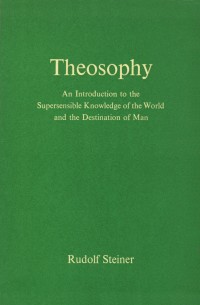
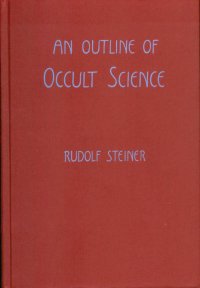
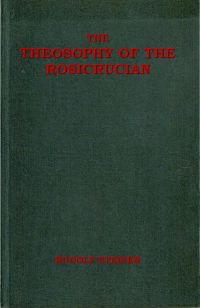
The principal sources in Rudolf Steiner's own writings are Theosophy (GA 9), Occult Science: An Outline (GA 13), and Theosophy of the Rosicrucian (GA 99). Together, these works provide the essential foundation for understanding the different members, their relationships, and their development.
Quinlan is a designer, looking to bring what's important back into the conversation. To this end, they lead public-facing projects, make breakthrough books, and is growing and developing a platform for bold, uncompromising ideas.
Quinlan is a designer, looking to bring what's important back into the conversation. To this end, they lead public-facing projects, make breakthrough books, and is growing and developing a platform for bold, uncompromising ideas.
Quinlan is a designer, looking to bring what's important back into the conversation. To this end, they lead public-facing projects, make breakthrough books, and is growing and developing a platform for bold, uncompromising ideas.
John Pickin is an actor, a trustee of a Steiner charity in Sheffield and has an interest in making the ideas of Rudolf Steiner accessible to those unfamiliar with them but wanting to find out more.
John Pickin is an actor, a trustee of a Steiner charity in Sheffield and has an interest in making the ideas of Rudolf Steiner accessible to those unfamiliar with them but wanting to find out more.
Quinlan is a designer, looking to bring what's important back into the conversation. To this end, they lead public-facing projects, make breakthrough books, and is growing and developing a platform for bold, uncompromising ideas.
Quinlan is a designer, looking to bring what's important back into the conversation. To this end, they lead public-facing projects, make breakthrough books, and is growing and developing a platform for bold, uncompromising ideas.




 Astronomica
 Astronomica
 Astronomica
 Astronomica
 Astronomica
 Astronomica
 Astronomica
 Astronomica
 Astronomica
 Astronomica
 Astronomica
 Astronomica
 Astronomica
 Astronomica





Discussion