



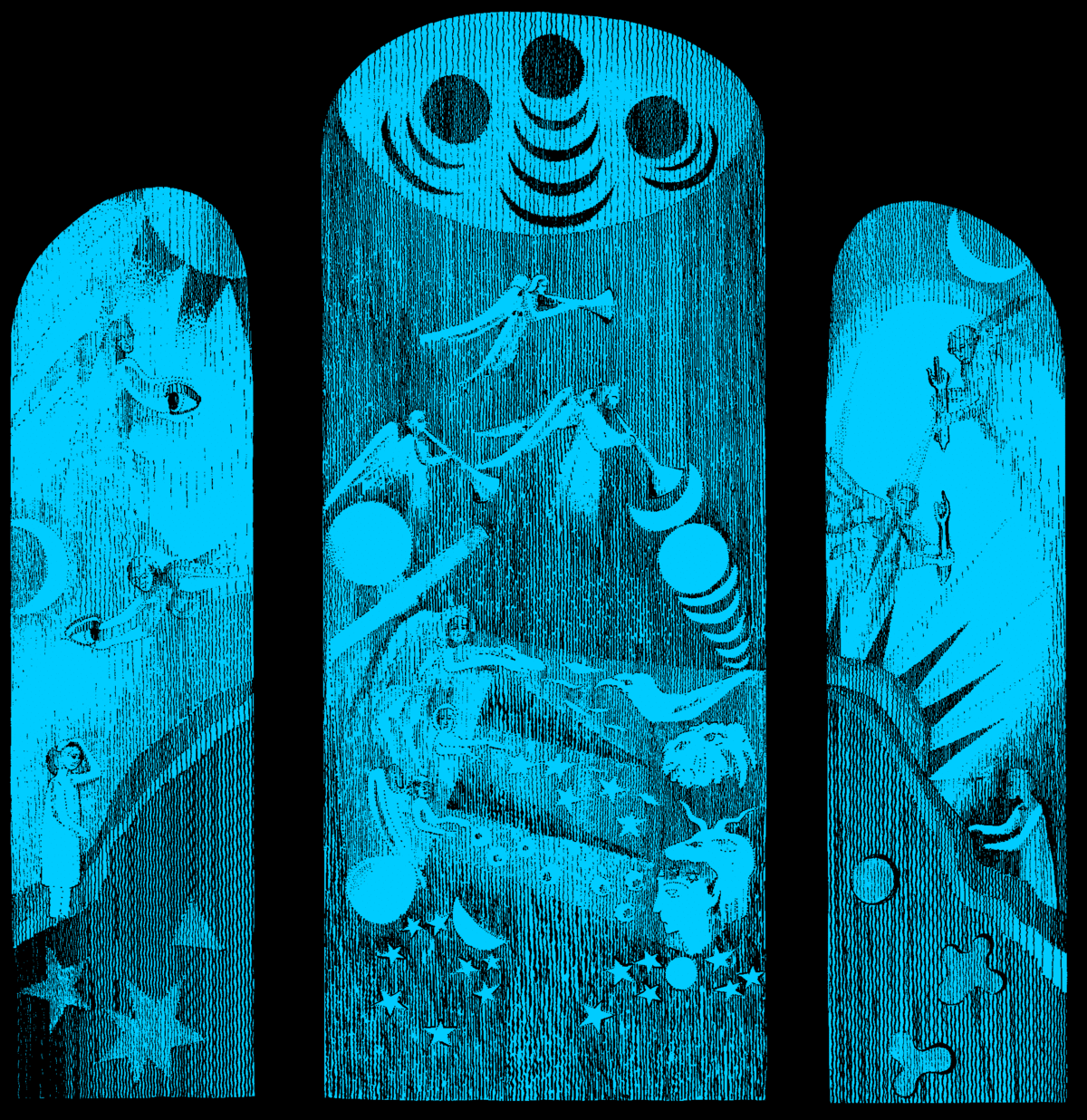
After the soul has passed through the intense "Midnight Hour," it enters a stage of the afterlife known in Anthroposophy as Lower Devachan, or the Spiritland. If the physical world is a land of shadows, Devachan is the world of light that casts them. It is a realm not of objects, but of the living, creative "archetypes" that stand behind everything we see on Earth.
What is Lower Devachan?
Lower Devachan is the world of Spirit-Form. In our physical life, we see a mountain, a river, or a human body as solid matter. In Devachan, these same things appear as their spiritual "negatives." Imagine a piece of clay where a seal has been pressed; the physical object is the seal, but Devachan is the hollow space it leaves behind, radiating with color and sound.
It is a place of absolute reality. Here, thoughts are not private or hidden; they are visible, external facts. To inhabit Devachan is to live within the very "thoughts of God," experiencing the blueprints of the universe as your surrounding environment.
Why Do We Go There?
We enter this realm because the human spirit needs to "recharge" and "retool." The physical world is a place of expenditure, we use up our life forces and our spiritual "capital." Lower Devachan is the great cosmic workshop where we replenish these forces.
The primary reason for this stay is The Harvest. Every experience you had on Earth; every moral choice, every artistic effort, and every technical skill, is like a seed. In the Spiritland, these seeds are "cooked" in the sun of the spiritual world until they ripen into the faculties you will possess in your next life. You go there to transform your past biography into your future biology.
How the Soul Navigates the Four Regions
The journey through Lower Devachan is divided into four distinct stages, each involving a specific type of spiritual labor.
First, the soul moves through the Continental Region. Here, you encounter the spiritual "skeleton" of the physical world. You learn the laws of form and density, working with the archetypes of minerals and the physical human frame.
Next is the Oceanic Region, where life itself flows like a great spiritual current. You experience the "livingness" of the world; the growth of plants and the vitality of animals, as a rhythmic, pulsing stream of energy. This stage is crucial for building the "life body" (etheric body) of your next incarnation.
Third, the soul enters the Atmospheric Region, where the inner world of feelings becomes the outer world of weather. On Earth, a feeling of love is internal; here, it is a radiant, warming atmosphere. A feeling of hatred is a spiritual storm. By living through these "weather patterns" of the soul, you learn how to better manage your emotions in the future.
Finally, the soul reaches the Social Region. This is where the great ideas of history, art, and science reside. In this region, you connect with the "World-Spirit" to see how your individual life can contribute to the progress of all humanity.
The Great Work: Building the Senses
The most "technical" aspect of this journey is the construction of your future physical organs. Using the archetypes found in these four regions, you and the Higher Hierarchies (spiritual beings) weave the "Spirit-Germ" of your next physical body.
In Lower Devachan, you are specifically focused on the nervous system and the senses. You are essentially "programming" the brain you will one day use to think and the eyes you will use to see. Because you are working from the inside out, you ensure that your future body is a perfect instrument for the karma you need to fulfill.
The Connection to the Living
A vital detail of this stage is that the deceased soul is not cut off from those still on Earth. Because Devachan is a world of living thoughts, your loved ones are "visible" to you through their inner lives. When someone on Earth thinks of a deceased person with genuine love or reads spiritual wisdom to them, it creates a "light" in Devachan that the soul can actually use. This interaction provides the soul with the warmth and strength needed to complete its arduous work of self-recreation.
For further reading on this topic, see;



Discussion